Warehouse epoxy flooring in Woodbridge is built joint first and bay by bay, for the storage and service operations along Route 1 and Interstate 95 whose floors carry forklifts, pallets, and turning loads all day.
Warehouse Epoxy Flooring in Woodbridge, VA by Woodbridge Epoxy Flooring Company
Warehouses Die at Their Joints
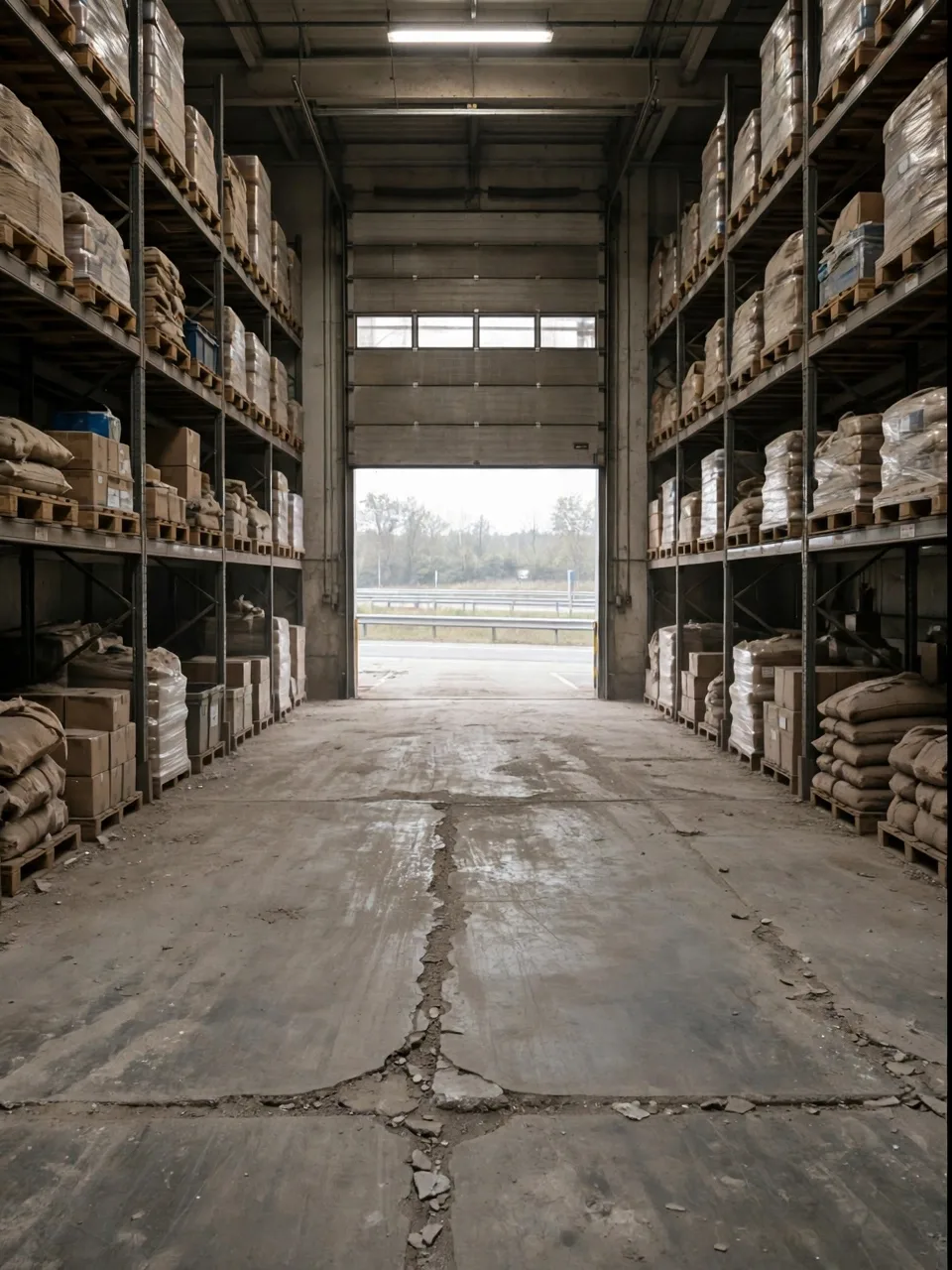
A warehouse floor rarely wears out evenly. It fails at the control joints where forklift wheels strike the same seams thousands of times, at the dock edge, and in the turning circle where every load pivots. Coating a handsome field over dying joints buys a good looking floor with a short life.
Our warehouse scopes therefore start at the joints and the lanes. Saw cut damage is cleaned out and rebuilt with load rated material, spalls are repaired flush, and only then does the field get ground and coated. Aisle lines and staging zones go into the finish itself, so the markings that direct traffic stay legible under it.
What a Warehouse Scope Includes
A Woodbridge warehouse installation is sequenced for traffic:
Joint survey and rebuild with load rated repair material
Degreasing and grinding sized to the building’s traffic
High build epoxy system across the working field
Aisle, walkway, and staging markings set into the finish
Bay by bay phasing that keeps part of the floor in service
The Joint Problem, Solved First
Everything in a warehouse scope is sequenced by the traffic that will judge it. Failed joint edges are cut out and rebuilt with load rated material first, because coating over them is decoration on a fault line. The field is then degreased, ground, and built up, and the aisle and staging markings are set into the finish where turning wheels cannot erase them. In the corridor’s older buildings that joint line is frequently the biggest number in the quote, shown plainly.
Recent Project: Warehouse Floor Along the Route 1 Corridor
BEFOREAFTER
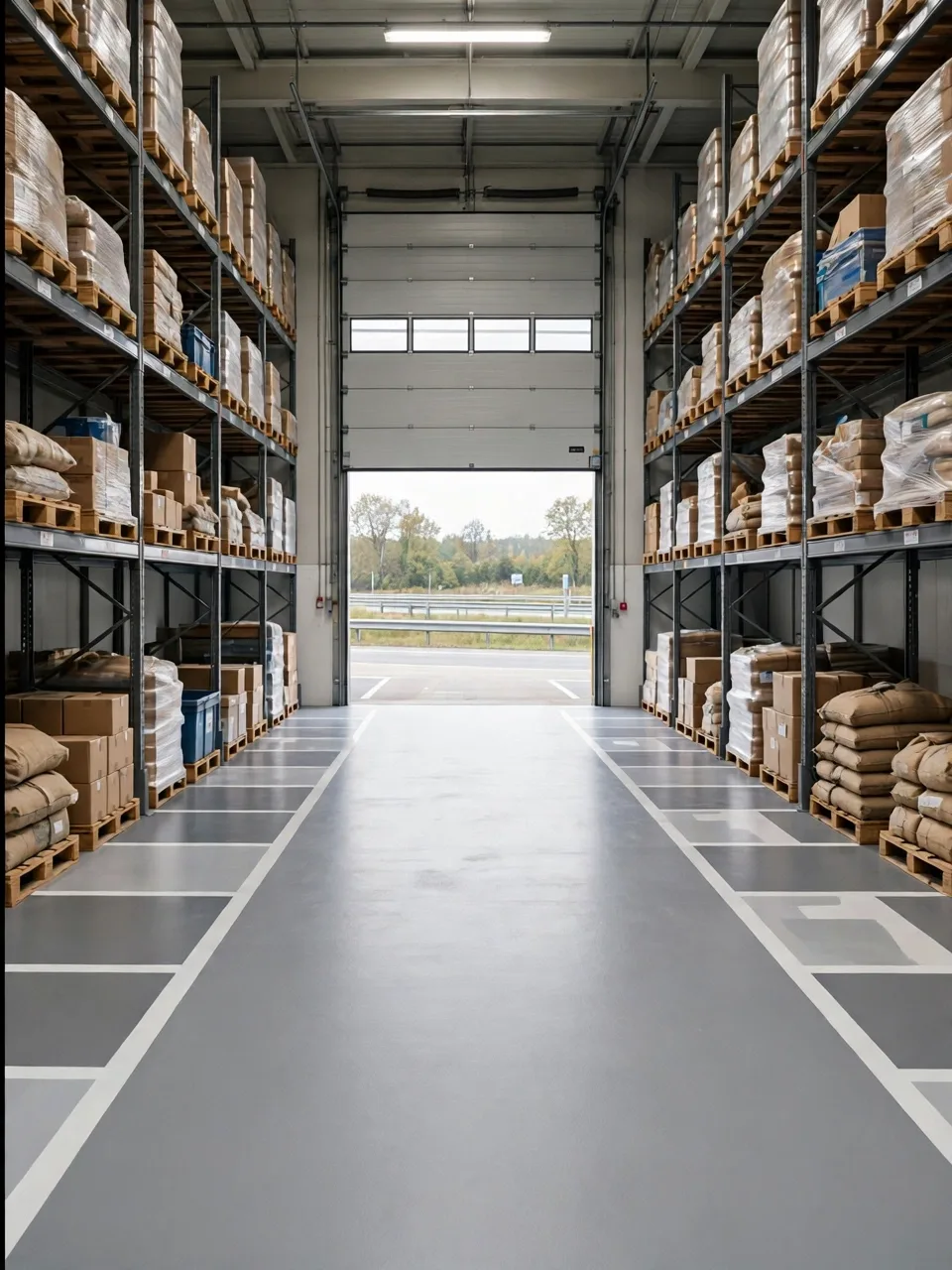
Route 1 warehouse: joints rebuilt in the forklift lanes, high build system laid bay by bay, staging zones set into the finish.
Turnaround
5 days
Final Price
$20,700
Running a Warehouse on a Sealed Floor
What changes on day one of operations: dust stops settling on stored goods, spills announce themselves on a sealed surface and lift without a trace, the building gets visibly brighter as light stops dying in gray concrete, and painted geography, lanes, walkways, staging, keeps people and machines sorted. And because the work was phased, the building earned money through its own renovation.
Bays reopen in sequence against the phasing plan
Set in markings outlast surface paint through turning traffic
A worn lane can be recoated without redoing the building
Autoscrub with neutral cleaner on your normal cycle, keep hard debris swept from the lanes, and report joint damage early. A joint repaired in its first season is an afternoon; the same joint in its third season is a lane closure, and the care sheet we leave says so in exactly those terms.
Treat the markings as part of the floor, not paint on it. Surface lines die first exactly where turning traffic needs them most. Lines built into the system, in durable color beneath the topcoat’s protection, are still directing people years later, long after the crew that laid them has been forgotten by the building.
Timeline and Cure Windows
Plan on three to six days of phased work for most Woodbridge warehouses, the spread set by joint damage and square footage. Each bay reopens in stages as its cure allows, foot traffic and light pallets first, forklifts only at full cure. Your approved plan lists the close and reopen date for every bay, and the crew checks in against it daily so the building’s schedule and ours stay the same document.
Plan Your Warehouse Floor Bay by Bay
Send the form and we will walk the lanes before anyone talks finish.